Grey Squirrel
Control
Expert grey squirrel control and removal from lofts, roofs, gardens, and commercial premises. We use humane, legal trapping methods to protect your property from damage and noise.
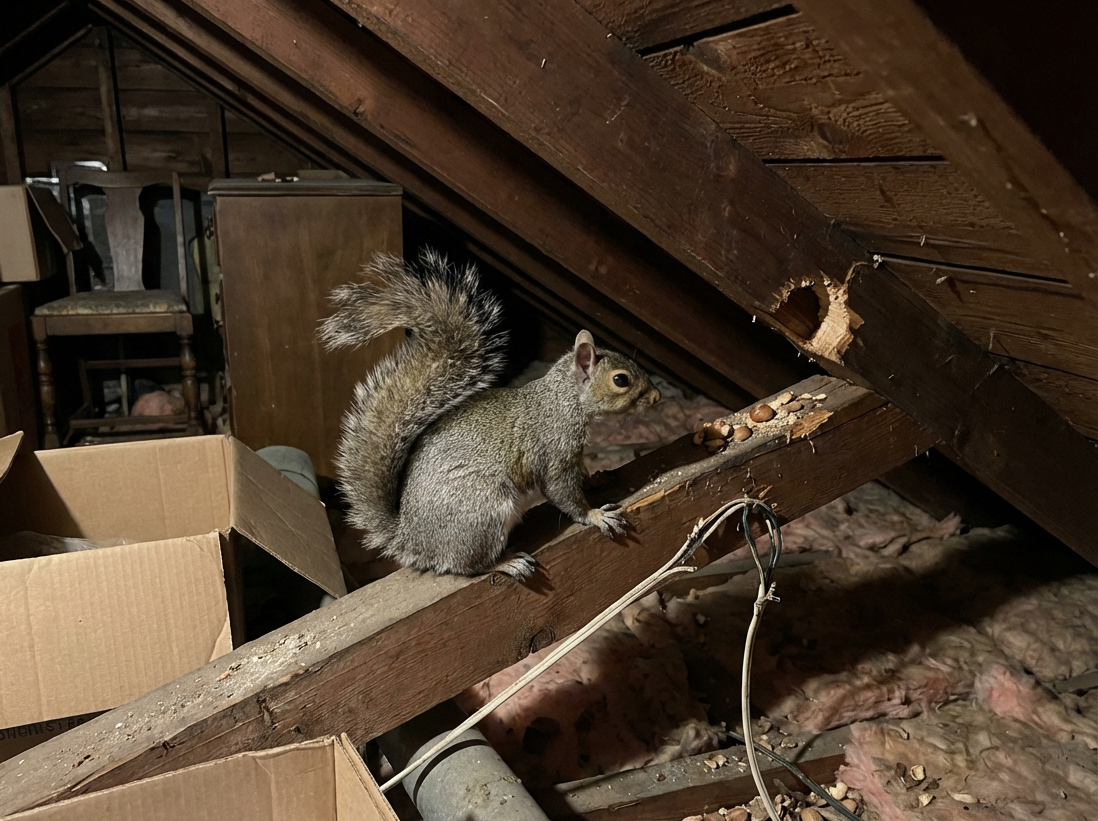
Grey squirrels are an invasive species in the UK and are classified as pests under the Wildlife and Countryside Act 1981. When they enter lofts, roof spaces, and wall cavities, they cause significant damage by gnawing through electrical cables, wooden beams, insulation, roofing felt, and pipework. Their constant scratching, scurrying, and chewing noises — particularly at dawn and dusk — can severely disrupt sleep and cause considerable anxiety for homeowners. Worse, squirrels are a leading cause of house fires when their gnawing exposes live electrical wiring in roof spaces.
Why Grey Squirrels Are a Serious Problem
Unlike the native red squirrel, grey squirrels are larger, more destructive, and highly adaptable to urban and suburban environments. They are excellent climbers and jumpers, capable of accessing roof spaces from overhanging branches, telephone cables, and drainpipes. Once inside a loft, they establish nests (dreys) using insulation, cardboard, and any available soft materials.
The damage they cause is not limited to noise and annoyance. Chewed electrical cables create fire and electrocution hazards. Gnawed roof timbers and rafters weaken structural integrity. Stripped insulation reduces energy efficiency and increases heating costs. Squirrels also carry parasites including fleas and ticks, which can migrate into living spaces and affect humans and pets.
Signs of Squirrels in Your Property
Squirrel activity in lofts and roof spaces is often mistaken for rats or mice, but there are key differences to watch for:
- Loud scratching and scampering — particularly at dawn and dusk, louder and more vigorous than mouse or rat noise.
- Visible entry damage — chewed soffits, fascia boards, roof tiles, and gaps around dormer windows or chimneys.
- Nest material in the loft — squirrels drag insulation, leaves, twigs, and cardboard into roof spaces to build dreys.
- Droppings — larger and more cylindrical than rat droppings, often found in clusters near nest sites.
- Chewed wires and timbers — distinctive gnaw marks on wooden beams, plastic pipes, and electrical cables.
- Sightings — squirrels regularly entering and exiting a hole in the roofline, particularly in early morning and late afternoon.
Our Grey Squirrel Control Service
We provide professional, legal trapping and removal in full compliance with the Wildlife and Countryside Act 1981. It is illegal to release grey squirrels back into the wild once captured, so we handle all trapped squirrels using approved humane dispatch methods. We never use poisons or illegal techniques.
- Property inspection — identifying entry points, nest locations, travel routes, and the extent of damage.
- Legal trapping — approved cage traps positioned along active travel routes and near entry points.
- Regular monitoring — traps checked frequently in accordance with welfare regulations.
- Humane dispatch — carried out swiftly and legally by qualified technicians.
- Nest and debris removal — clearing contaminated insulation, droppings, and nesting material from the loft.
- Damage assessment — advising on electrical and structural repairs required.
Squirrel Proofing and Prevention
Removing squirrels without sealing entry points is pointless — squirrels are territorial, and new individuals will quickly move into a vacated loft. Our pest proofing service identifies and seals every access point: broken roof tiles, gaps in soffits and fascia, uncapped chimneys, missing vent covers, and overhanging branches that provide bridge access. We use metal flashing, wire mesh, and robust sealants that squirrels cannot chew through.
If you hear scratching in your loft, see squirrels entering your roofline, or find chewed wires in the attic, call us immediately on 07523084275. Grey squirrel problems worsen quickly, and early intervention prevents costly damage.
Why Choose Us
What Sets Us Apart
Legal Compliance
We operate within UK wildlife law. Grey squirrels must be dispatched humanely — we use approved, legal methods only. No poisons, no illegal release.
Roof & Loft Specialists
Squirrels often enter through damaged soffits, fascia gaps, broken tiles, or chimneys. We specialise in roof-level access points and proofing.
Structural Proofing
We don't just remove squirrels — we seal entry points with chew-resistant materials to prevent re-entry by squirrels or other pests.
Damage Assessment
We inspect for gnawed cables, insulation damage, and water ingress caused by squirrel entry and advise on necessary repairs.
Common Questions
Frequently Asked Questions
Grey squirrels are an invasive non-native species that cause significant property damage, outcompete native red squirrels, and are legally classified as pests in the UK.
No. It is illegal under UK law to release a captured grey squirrel into the wild. They must be dispatched humanely by licensed professionals.
They climb drainpipes, jump from nearby trees, and enter through gaps in soffits, fascia boards, broken roof tiles, uncapped chimneys, or damaged vent covers.
Squirrels gnaw continuously to keep teeth sharp. They damage electrical cables (fire risk), wooden beams, insulation, roofing felt, and water pipes in lofts and roof spaces.