
Stored Product
Pest Treatment
Professional treatment for weevils, flour beetles, grain beetles, and pantry moths that contaminate stored food in homes, restaurants, bakeries, and commercial food premises.
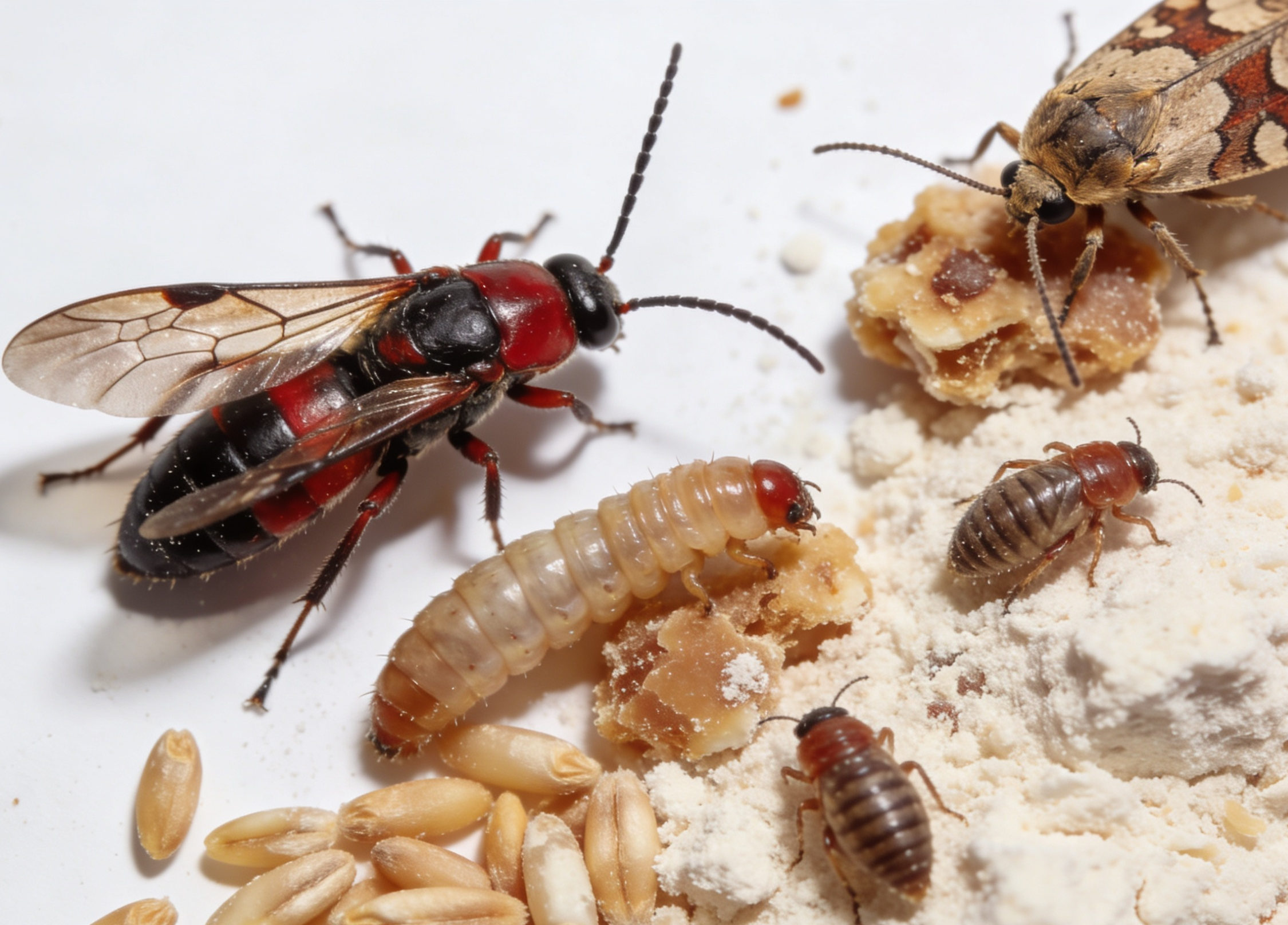
Stored product pests are a serious threat to food safety and hygiene in homes, restaurants, bakeries, food manufacturing premises, and commercial kitchens. These insects — including weevils, flour beetles, grain beetles, and pantry moths — infest dry stored foods such as flour, cereals, rice, pasta, grains, nuts, dried fruit, spices, and pet food. They contaminate products with their droppings, shed skins, webbing, and body parts, rendering food unfit for consumption and potentially triggering allergic reactions or food safety enforcement action.
Common Stored Product Pests in the UK
Several species commonly infest stored food products. The most frequently encountered include:
- Indian Meal Moth (Plodia interpunctella) — the most common pantry moth. Larvae produce silk webbing across food surfaces and feed on cereals, dried fruit, nuts, pet food, and grain. Adult moths are distinctive with copper-coloured wing tips.
- Rice Weevil (Sitophilus oryzae) — small dark beetles that bore into whole grains and rice. Females lay eggs inside individual grains where larvae develop, making infestations hard to detect until adults emerge.
- Grain Weevil (Sitophilus granarius) — similar to the rice weevil but preferring wheat, barley, and oats. Commonly found in bulk grain storage and farm stores.
- Confused Flour Beetle (Tribolium confusum) — flat, reddish-brown beetles that infest flour, cereal products, and processed grains. They cannot penetrate whole grains but thrive in milled products.
- Rust-red Flour Beetle (Tribolium castaneum) — closely related to the confused flour beetle and found in similar products. Produces a distinctive odour in heavily infested food.
- Sawtoothed Grain Beetle (Oryzaephilus surinamensis) — named for the tooth-like projections on its thorax. Feeds on cereals, dried fruit, nuts, chocolate, and even tobacco. Can squeeze through very narrow packaging gaps.
- Biscuit Beetle (Stegobium paniceum) — infests a wide range of dry stored products including biscuits, pasta, spices, and even pharmaceutical products. Larvae can chew through foil and plastic packaging.
Why Professional Stored Product Pest Treatment Matters
Simply throwing away visibly contaminated food is not enough. Stored product pests lay eggs inside packaging, within cracks in shelving, behind kick plates, and inside equipment. Larvae can survive on tiny amounts of food residue in crevices, and adult beetles and moths can travel considerable distances to find new food sources. Without professional treatment, re-infestation is almost certain.
For commercial food businesses, stored product pests pose a significant risk to food safety compliance. Environmental Health Officers can issue improvement notices, close premises, or prosecute businesses that fail to control pest contamination. Professional stored product pest treatment from Eco-Guard Environmental Services eliminates the infestation and helps you maintain compliance with food safety regulations.
How Our Stored Product Pest Treatment Works
Our RSPH Level 2 qualified technicians use a comprehensive approach to eradicate stored product pests and prevent their return:
- Detailed survey — we identify the pest species, locate all infested products and harbourage areas, and assess the extent of contamination across the premises.
- Infested product removal — all contaminated food items are identified and safely disposed of to eliminate the primary food source and breeding sites.
- Residual insecticide treatment — professional-grade residual spray is applied to shelving, cupboards, cracks, crevices, and equipment to kill remaining adults and larvae on contact.
- ULV fogging for severe infestations — ultra-low volume misting penetrates deep into shelving joints, equipment gaps, and voids where insects hide.
- Monitoring and prevention — we install pheromone traps to monitor for residual activity and advise on stock rotation, storage practices, and proofing to prevent re-infestation.
Signs You Have a Stored Product Pest Problem
Early detection prevents widespread contamination. Look for these warning signs:
- Small beetles or larvae crawling in or around stored food, on shelves, or near packaging.
- Silk webbing or clumping in flour, cereals, or grains — a sign of Indian meal moth larvae.
- Small holes in whole grains or rice where weevil larvae have emerged.
- Unusual sweet or musty odour near food storage areas — produced by flour beetles in large numbers.
- Shed larval skins or faecal pellets (frass) in or near food products.
- Adult moths flying near kitchen ceilings, light fixtures, or pantry areas — especially at dusk.
- Live insects inside sealed packaging — many species can chew through paper, foil, and thin plastic.
Preventing Future Stored Product Pest Infestations
After treatment, proper food storage and hygiene are essential to prevent re-infestation. Store all dry goods in sealed, airtight containers made of glass or thick plastic. Practice first-in, first-out stock rotation, especially in commercial premises. Clean shelving and cupboards regularly to remove food residue that sustains small populations. Inspect incoming stock for signs of infestation before storing. For commercial food businesses, consider our consultation service for ongoing pest management plans tailored to your operation.
If you suspect stored product pests in your home or business, don't risk further contamination. Call Eco-Guard Environmental Services on 07523084275 or send a WhatsApp for professional stored product pest treatment.
Why Choose Us
What Sets Us Apart
Rapid Response
Every day of infestation means more contaminated food. We respond quickly to minimise waste and disruption.
Food-Safe Methods
Our treatments are designed for use in food environments, targeting pests while maintaining food safety standards.
Complete Eradication
We don't just treat visible pests — we find and eliminate hidden harbourage in shelving, equipment, and structural gaps.
Guaranteed
If stored product pest activity continues after treatment, we return free of charge until the infestation is fully resolved.
Common Questions
Frequently Asked Questions
Most stored product pests enter inside already-infested food products purchased from shops. Some species can fly in through open windows or gaps. In commercial premises, they may arrive in bulk deliveries or spread from neighbouring premises.
Only visibly contaminated or opened products need to be discarded. Sealed, unopened products in intact packaging can often be retained. Our technician will advise which items are safe to keep during the inspection.
Yes. We use professional-grade insecticides approved for use in food premises. Treatments are applied to cracks, crevices, and harbourage areas — not directly onto food surfaces. All food items and preparation surfaces are covered or cleared before treatment.
Store all dry goods in sealed airtight containers, rotate stock regularly, inspect incoming products, and clean storage areas thoroughly. For businesses, we can set up a monitoring programme with pheromone traps for early detection.