
Textile Pest
Treatment
Expert treatment for clothes moths, carpet beetles, and fur beetles that damage fabrics, carpets, clothing, and soft furnishings. Our technicians eliminate infestations and protect your valuable textiles.
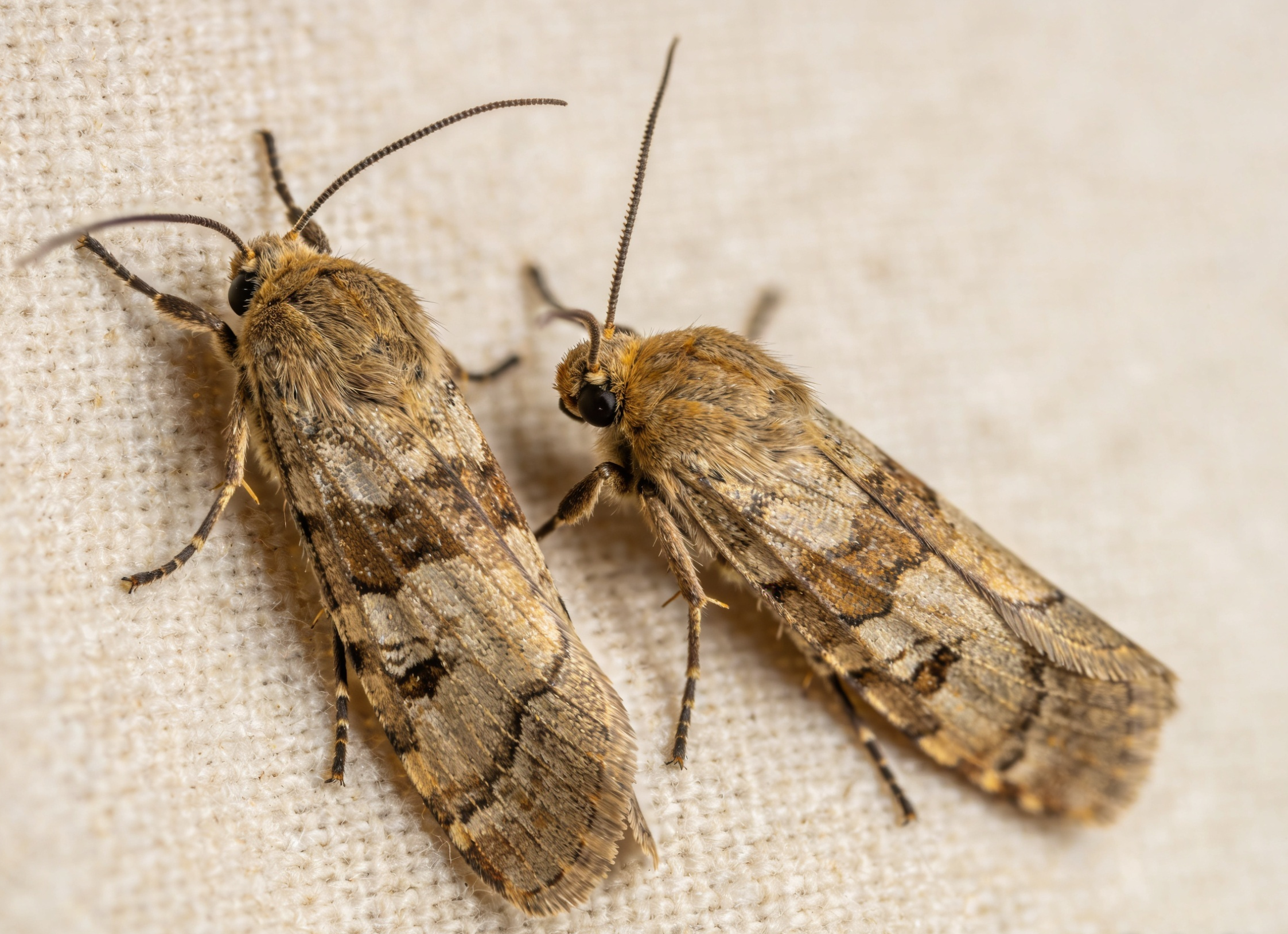
Textile pests are among the most destructive and overlooked household invaders in the UK. Clothes moths, carpet beetles, and fur beetles silently consume natural fibres — wool, silk, cotton, feathers, fur, and leather — causing irreversible damage to clothing, carpets, upholstery, curtains, and cherished items before most homeowners even realise there is a problem. By the time you spot the tell-tale holes or bare patches, the infestation is often well established.
Common Textile Pests in the UK
Several species target natural fibres in homes and businesses. The most prevalent include:
- Common Clothes Moth (Tineola bisselliella) — the most widespread textile pest. Larvae feed on wool, fur, feathers, and silk, preferring dark, undisturbed areas such as wardrobes, lofts, and under furniture.
- Case-Bearing Clothes Moth (Tinea pellionella) — larvae carry a silken case as they move, feeding on similar materials. Often found in bird nests in lofts which then spread indoors.
- Carpet Beetle (Anthrenus verbasci) — small, rounded beetles whose larvae (woolly bears) eat carpets, upholstery, and animal specimens. They thrive in warm rooms and are commonly found along skirting boards and under furniture.
- Fur Beetle (Attagenus smirnovi) — larvae damage fur, feathers, and dried animal products. Frequently found in lofts and storage areas with old textiles or taxidermy.
Why Professional Textile Pest Treatment Is Essential
DIY approaches such as mothballs, cedar blocks, and lavender sachets only repel adult moths — they do nothing to kill larvae already feeding on your textiles. The larvae are the destructive stage, and they hide deep within fabrics, under carpets, behind skirting boards, and inside wardrobes where household remedies simply cannot reach them.
Furthermore, textile pest infestations often originate from hidden sources such as abandoned bird nests in lofts, old wasp nests, or rodent nesting material in cavity walls. Unless these sources are identified and removed, the problem will persist regardless of how many clothes you wash or how much repellent you use. Professional textile pest treatment from Eco-Guard Environmental Services addresses the root cause, not just the symptoms.
How Our Textile Pest Treatment Works
Our RSPH Level 2 qualified technicians follow a systematic approach to eliminate textile pests and prevent their return:
- Thorough inspection — we identify the species, locate all infestation hotspots, and trace the source, including bird nests, rodent debris, and stored items.
- Targeted insecticide treatment — professional-grade residual insecticide is applied to carpets, wardrobes, skirting boards, lofts, and affected areas to kill larvae and eggs on contact.
- ULV fogging where needed — for severe or widespread infestations, ultra-low volume fogging penetrates deep into fabrics, cracks, and voids to reach hidden larvae.
- Source removal — we remove bird nests, rodent debris, and other harbourage materials that sustain the infestation.
- Preventive advice and proofing — guidance on storage, cleaning, and environmental controls, plus installation of insect-proof vents and sealing of entry points.
Signs You Have a Textile Pest Problem
Textile pests are secretive and often go unnoticed until damage becomes visible. Watch for these warning signs:
- Irregular holes in wool, silk, or cashmere clothing, especially items stored for long periods.
- Bare patches or threadbare areas on carpets, particularly along edges and under furniture.
- Small, rice-shaped larvae (creamy-white for clothes moths; brown and hairy for carpet beetles) crawling on walls, ceilings, or fabrics.
- Silken tubes or cases attached to fabrics — a sign of case-bearing clothes moth larvae.
- Shed larval skins or tiny faecal pellets (frass) near stored clothing or under furniture.
- Adult moths fluttering near wardrobes, landing on walls or ceilings — especially in dimly lit rooms.
- Damaged feathers in pillows, duvets, or taxidermy mounts.
Preventing Future Textile Pest Infestations
After treatment, taking preventive steps is essential to protect your textiles long-term. We recommend storing seasonal clothing in sealed garment bags or airtight containers, regularly vacuuming carpets and under furniture, washing or dry-cleaning items before long-term storage, and ensuring lofts and cavity walls are free of bird and rodent nesting material. For ongoing protection, consider our pest proofing service to seal entry points and install deterrents.
If you suspect textile pests are damaging your fabrics, carpets, or clothing, don't wait for the problem to worsen. Call Eco-Guard Environmental Services on 07523084275 or send a WhatsApp for professional textile pest treatment.
Why Choose Us
What Sets Us Apart
Rapid Response
Textile pests cause damage every day they go untreated. We respond quickly to stop the destruction.
Safe Methods
We use targeted treatments that eliminate larvae and eggs while minimising exposure in living areas and wardrobes.
Source Identification
We trace infestations to their origin — bird nests, rodent debris, or hidden harbourage — for lasting results.
Guaranteed
If textile pest activity continues after treatment, we return free of charge to ensure the infestation is fully resolved.
Common Questions
Frequently Asked Questions
Clothes moth larvae leave silken webbing or cases on fabrics and prefer dark, undisturbed areas. Carpet beetle larvae are small, hairy, brown grubs that shed skins near skirting boards and under furniture. Our technicians can identify the species during inspection.
Washing at 60°C kills eggs and larvae on the washed items, but it does not address larvae hiding in carpets, wardrobes, lofts, or behind skirting boards. Professional treatment targets all harbourage areas.
Yes. Our residual insecticides and fogging treatments are designed for use in domestic and commercial environments. They target the pests, not the fabrics, and are applied carefully to avoid staining or damage.
A standard treatment typically takes 1-2 hours depending on the size of the property and severity of the infestation. You may need to vacate briefly during fogging treatments, but residual sprays require no such precaution.